


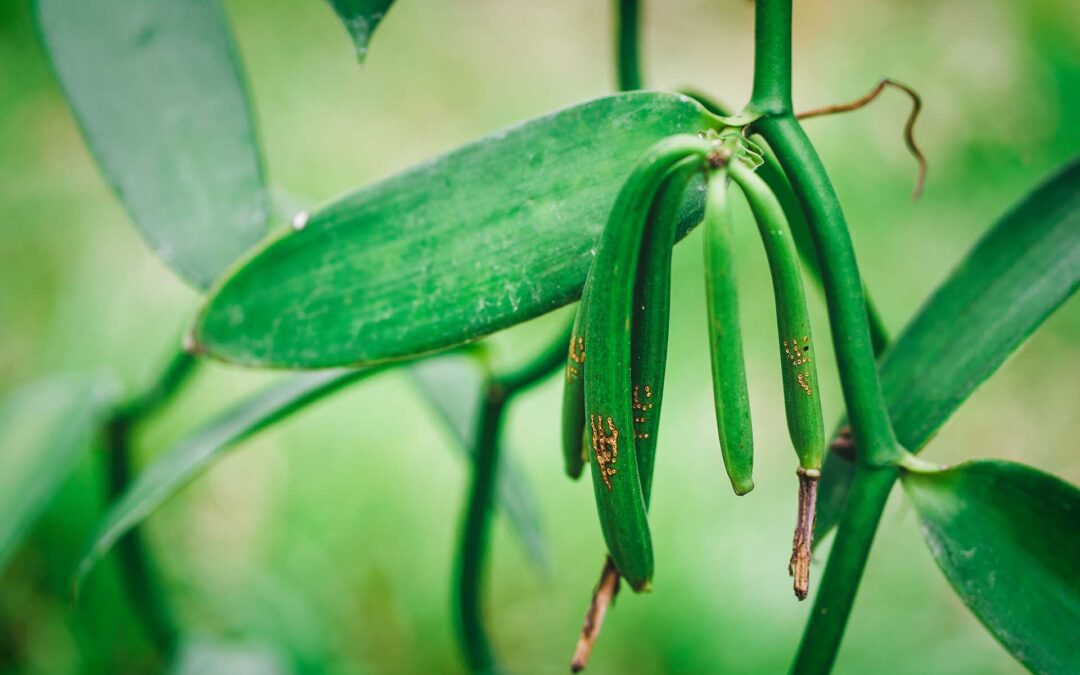
For decades, synthetic vanillin dominated the food industry due to its low cost and virtually unlimited availability. Today, however, a growing trend is encouraging manufacturers to reintegrate natural vanilla into their formulations. Here is an analysis of this return to authenticity.
Artificial vanillin, primarily derived from lignin or guaiacol, still accounts for the vast majority of global vanilla flavor consumption. However, over the past few years, a significant shift has emerged among major food brands, driven by combined pressure from consumers, retailers, and new labeling regulations.
THE IMPACT OF THE “CLEAN LABEL” MOVEMENT
The “clean label” trend is pushing manufacturers to reformulate their products by removing ingredients perceived as artificial. The term “natural vanilla flavor” has become a powerful marketing asset, capable of justifying higher retail prices while strengthening the perceived quality of a product range.
Major players in confectionery, industrial bakery, and dairy production have already begun this transition. This movement is not temporary; it reflects a lasting change in consumer expectations, particularly in Europe, where buyers are increasingly attentive to ingredient quality and label transparency.
A WELL-DOCUMENTED AROMATIC DIFFERENCE
Natural Madagascar vanilla contains more than 250 distinct aromatic compounds, compared to just one in synthetic vanillin. This molecular complexity creates a flavor profile that experts describe as “round,” “long-lasting,” and “nuanced,” qualities that cannot be replicated through chemical synthesis.
In finished products, the difference is noticeable, especially in bakery and ice cream applications where vanilla serves as a signature ingredient. The warm caramel notes, subtle woody undertones, and lingering finish characteristic of Madagascar Bourbon vanilla are recognized quality markers that experienced consumers can identify immediately.
Scientific research also confirms that the complex aromatic matrix of natural vanilla offers better thermal stability in certain applications, particularly in pastry and chocolate production, where processing temperatures can degrade more volatile flavor compounds.
REASSESSING THE COST FACTOR
The economic challenge remains real: natural vanilla is significantly more expensive than its synthetic counterpart. However, manufacturers that have made the transition report that smaller quantities are often required, aromatic performance is superior, and the increased perceived value of the final product allows part of the additional cost to be passed on to consumers.
For premium and organic product lines in particular, the cost-benefit ratio has proven favorable. A study conducted among European manufacturers that reformulated their recipes found that the switch to natural vanilla was offset, on average, by an 8% to 15% increase in retail prices, without negatively affecting sales volumes.
Furthermore, working directly with a structured exporter such as Ile d’Or Company makes it possible to secure contractual pricing over several years, thereby reducing exposure to fluctuations in the international spot market.
THE INDUSTRIES LEADING THE TRANSITION
Some sectors are more advanced than others in adopting natural vanilla. Artisanal and industrial ice cream manufacturers were among the pioneers, followed by high-end pastry makers and premium chocolate producers. The premium beverage sector, particularly spirits and natural soft drinks, is currently one of the fastest-growing segments.
Cosmetics and perfumery, traditionally major consumers of natural vanilla extracts, remain stable and demanding markets, with some of the highest quality and traceability standards in the industry.
ILE D’OR COMPANY supports manufacturers throughout their transition to natural vanilla, from product reformulation to the reliable supply of tailored volumes. Every batch is certified, fully traceable, and compliant with European export standards.